

In CVM marketing, predictive models play a central role in retention: they identify the most vulnerable segments and let you offer them something of genuine value — a discount, loyalty points or a premium service — that can change how they feel about the company.
In other words, predictive models make retention effective. They raise satisfaction, show the customer that the company understands and values their needs, and keep them from moving to a competitor.
The numbers worth knowing
A returning user has a 60–70% probability of making a purchase, while a new user buys with a probability of 5–20%.
And the average order value of returning users is up to 33% higher than that of new ones.
No surprise, then, that 82% of companies agree that retaining customers is cheaper than acquiring new ones.
Source — AnnexCloud
Why customers leave
Churn can be split into natural churn and motivated churn. Natural churn happens for reasons outside the company’s control — relocation, a change in life circumstances, a shift in needs. If a customer moves to another country, they will stop using local services.
Motivated churn is most often caused by the company’s own actions: price increases, declining product quality or worse service. If an online marketplace stocks the products a shopper needs at the best prices with the fastest delivery, they will keep coming back. If the products are missing, if delivery or quality suffers, and if prices are higher than the alternatives, the shopper may stop returning.
What predictive models are
Predictive models forecast events and their characteristics. The event might be a purchase or the absence of one; the characteristic might be its value.
The forecast is built on data and on different models for processing it. In marketing, the data usually collected is customer data: purchase history, personal attributes and interests.
The processing models are methods from mathematical statistics, machine learning algorithms, neural networks and others.
How predictive models predict that a user is about to leave
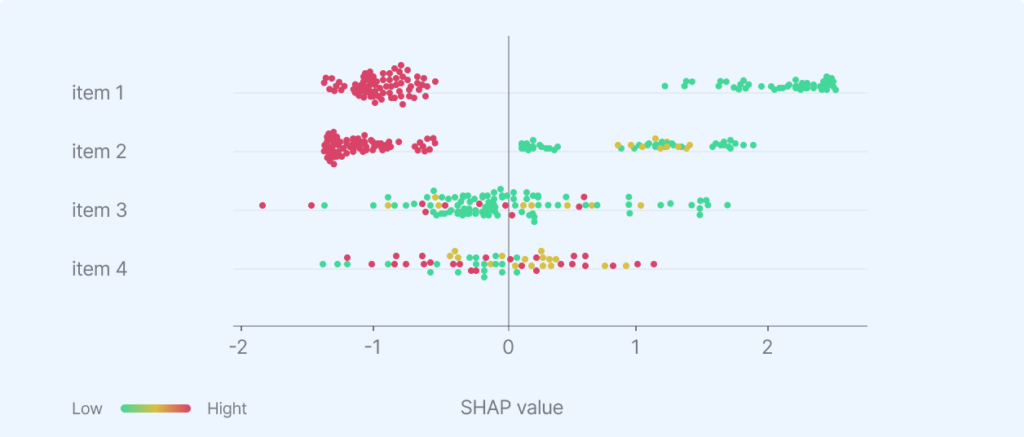
Predictive models analyse data and find the patterns that let them forecast future events. They are trained on historical data where both the input parameters and the target outcomes are known. During training, an algorithm such as XGBoost builds a model that predicts outcomes from new data. We use SHAP to identify the key features, resampling to correct class imbalance and normalisation to improve accuracy.
A churn prediction model is trained on customer behaviour data: purchase history, service interactions, how often the customer contacts support and other factors. During training, the algorithm works out which features have the strongest influence on churn probability. A drop in purchase frequency or fewer interactions, for example, can indicate elevated churn risk.
To assess accuracy and generalisation, the model is tested and validated on independent data sets. That means the model checks itself against data it has not seen, using cross-validation. This prevents overfitting and improves the model’s ability to generalise, so predictions stay reliable on new data.
Once the model has been trained on historical data, it is applied to active users to determine churn probability. It compares current user data against the learned features to surface everyone who may be at risk. If the current data shows falling activity for a particular user, the model can predict a high churn probability and flag them for retention measures.
How to use predictive models
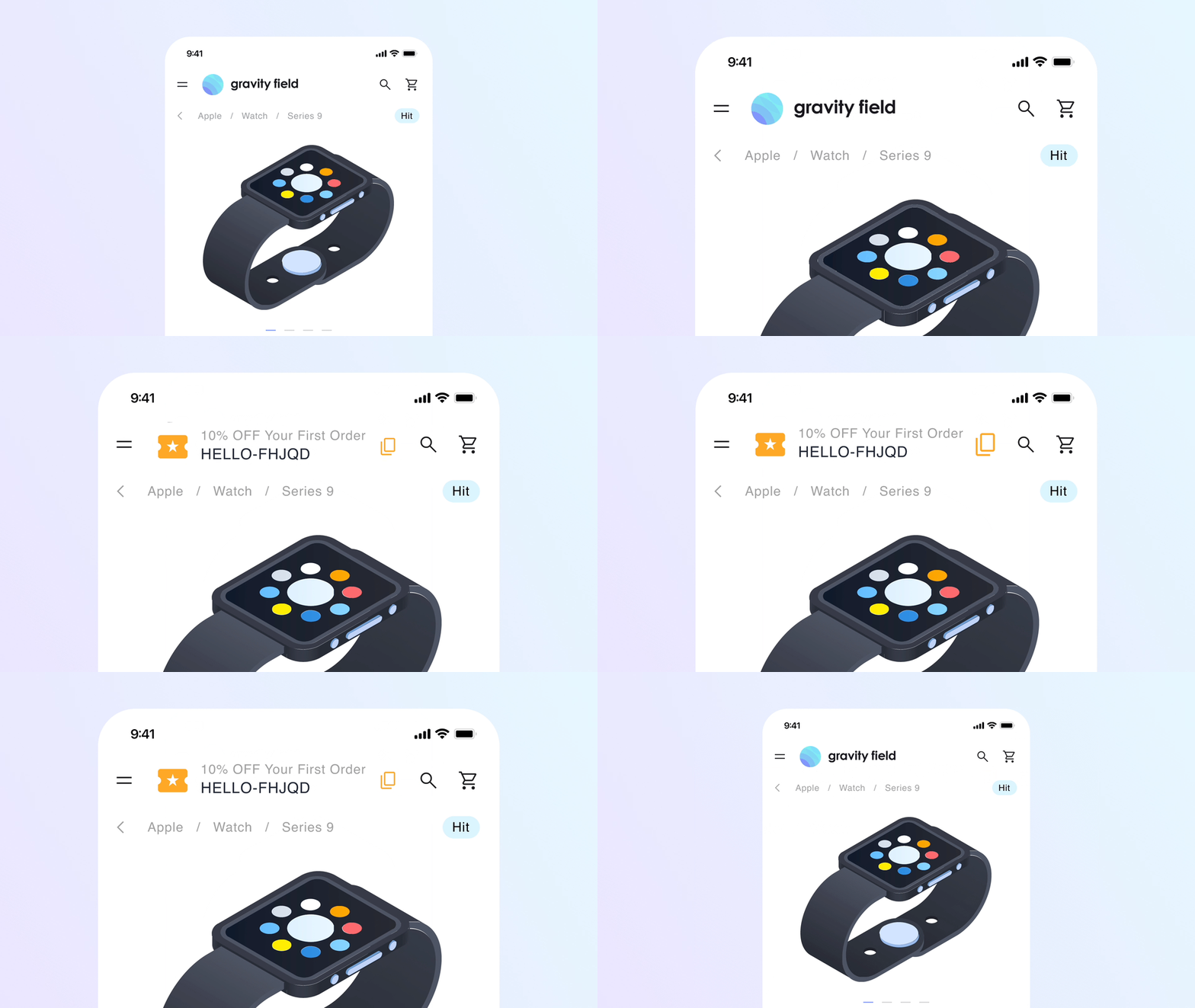
In most cases, retention work comes down to applying a specific mechanic to users at high risk of churn: a discount, free delivery, loyalty points, cashback, a dedicated communication channel.
Choosing the mechanic
The job is to find a mechanic you can scale and apply consistently to every new cohort of high-risk users.
Mechanic 1 — Discounts and promo offers
Users may be unhappy with high prices and start actively exploring alternatives. Their activity deviates from the norm, and the model reads that deviation as a churn signal. The usual response in these cases is a discount or a promotional campaign.
The format of the discount is a field for experimentation in its own right. Teams usually start with the obvious options — a discount across the whole catalogue, or free delivery — and end up with personal offers, where the item and the size of the discount are determined automatically for each user from their data.
Mechanic 2 — Optimising marketing efficiency
Many teams lean on the familiar email scenarios: abandoned cart, abandoned browse, back in stock and so on. Unfortunately, very few of them account for real purchase intent, so users receive irrelevant and intrusive reminders that only make things worse.
If a user has filled a cart and genuinely intends to buy, an abandoned cart reminder is just a distraction. But for users who have gone off to look at alternatives, the same reminder can work well: it points out that the items they wanted are already in the cart and shifts attention from comparison shopping back to completing the order.
Mechanic 3 — Integration with the loyalty programme
A points programme is an excellent way to reward users — and an equally good way to reactivate the ones who have drifted off course.
Unlike a plain discount, the mechanic here works like this: users at high churn risk are told that their next purchase will earn them 1,000 loyalty points. That not only motivates one more purchase — it lays the groundwork, in the form of points, for the purchase after that.
Mechanic 4 — Optimising an expensive communication channel
Channels such as SMS and WhatsApp are known for their deliverability and their cost. Teams often fail to use them efficiently, because a large share of the messages is wasted on users who were going to buy anyway. A predictive churn model makes it easy to cut those users out and send the message only to people with a high churn probability.
Mechanic 5 — Optimising acquisition channels
Analysing churn by acquisition channel is an excellent way to optimise the acquisition budget. If a large number of high-risk users came from one particular channel, it is worth reallocating that budget to channels that bring a more loyal audience.
It is also worth analysing why users from that channel lose interest so quickly. Most likely their needs differ in some way — and if you learn to meet those needs, that is a good opportunity to open up a new segment.
Unit economics
Predicting churn is only half the job. The retention mechanic also has to make economic sense: the cost of retention must be lower than the additional profit from the users you retain.
Use A/B testing to evaluate different retention strategies. If you want to check how effective a discount offer is for customers at high churn risk, run an A/B test.
Example: suppose the team decides to offer a 20% discount to customers the model has flagged as high churn risk. For the A/B test it splits those customers into two groups. Group A receives the discount offer; group B receives nothing. The core metrics to analyse are:
- Conversion rate: the share of customers who used the discount out of everyone who received the offer. This shows how attractive the offer was.
- Average order value (AOV): the average order size in each group. This shows the effect of the discount on sales volume.
- Customer lifetime value (LTV): the average revenue from a customer across the whole relationship. This metric shows whether the discount is worth offering in terms of long-term revenue.
- Retention rate: the number of customers who stayed, divided by the total number in the group. This lets you compare retention in group A against group B.
- Churn rate: the percentage of customers who left after the test ended. This is the key metric for judging how the offer affected churn.
If the group that received the discount shows a significantly higher retention rate, and the cost of retention is lower than the additional profit from the retained users, the discount offer is working. A/B testing therefore does two things at once: it shows the real value of the strategies you apply, and it lets you optimise them for the best possible result.
Conclusion
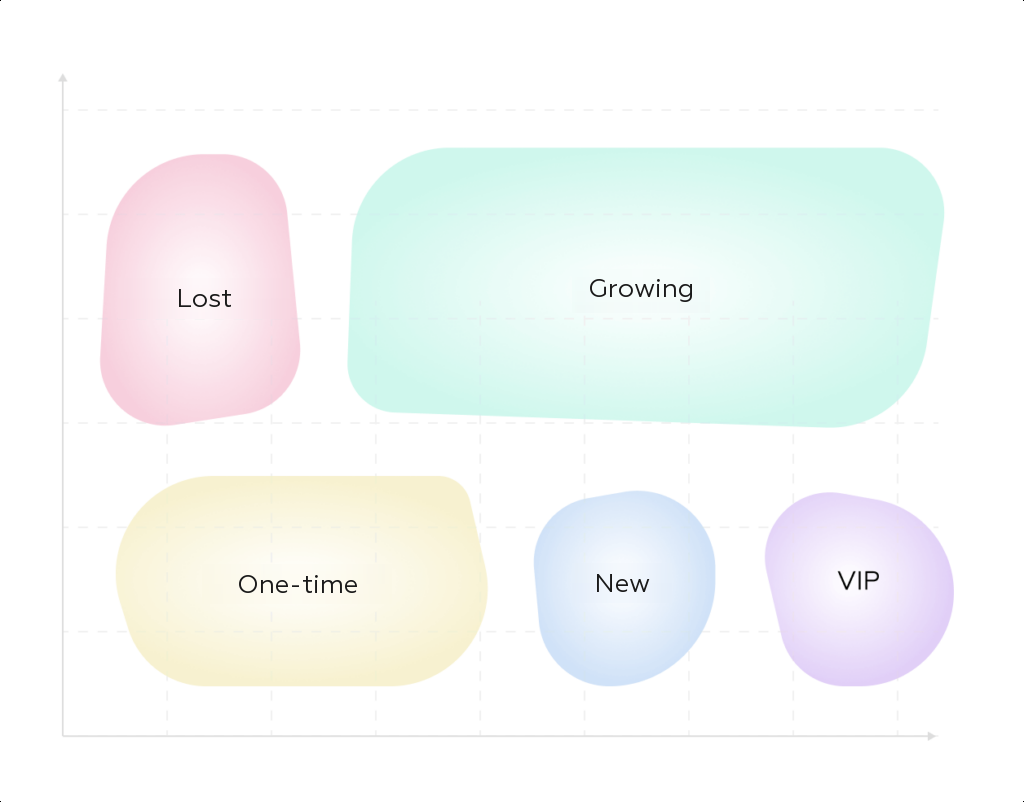
It is worth remembering that the simpler the mechanic, the faster competitors copy or counter it. Running a 10% discount for pre-churn users? A competitor will run 15% off the first order.
The durable way to work with an audience is to use data to build a unique interaction with every single user.
The Gravity AI: Churn Prediction model lets companies act in time to retain customers. That not only reduces the cost of acquiring new ones — it also drives revenue and improves service quality. In a tight competitive market, customer retention becomes one of the key factors behind success and sustainable growth.
How do you use Gravity AI?
Trying Gravity AI requires no integration and no complex rollout — you simply upload a file with your customer and transaction data.
Gravity AI builds a predictive model from that data. You get the result as a file containing the churn probability for every customer, along with the model’s own quality metrics.


